Part 1 — Bringing it All Together
Executive Summary
This page introduces the process behind designing a constitutional national flag grounded in parity, balance, and cross-community belonging.
In a landscape shaped by overlapping histories and divided allegiances, no single emblem can speak for all.
Yet through structured design, grounded in constitutional principles rather than sentiment, a new flag framework has been developed — one that respects difference, avoids erasure, and offers a shared point of belonging.
This framework is not abstract — it responds directly to a central question: why a new flag is needed at all.
Why a New Flag?
Ireland’s future may require a symbol that represents all communities equally — British, Irish, and Northern Irish — without implying dominance, victory, or absorption.
The purpose is not to replace identity, but to create a neutral constitutional centre that everyone can recognise without losing themselves within it.
A flag alone cannot deliver reconciliation.
But a carefully designed flag, aligned with the constitutional framework, can express the principles that make reconciliation possible. When grounded in a constitutional framework, a carefully designed flag can give visible form to those principles:
-
balance,
-
inclusion,
-
shared belonging,
-
non-hierarchical identity.
Before designing a shared symbol, we must understand the ones that shaped division.
The flags of our past carried profound meaning — but also exclusion, contestation, and imbalance.
A future of belonging requires a symbol that honours history without repeating its divisions.
Flags that shaped Identity — and Division
The Good Friday Agreement captures the central challenge of symbols:
“All participants acknowledge the sensitivity of the use of symbols and emblems for public purposes… and the need… to ensure that such symbols and emblems are used in a manner which promotes mutual respect rather than division.”
To understand why a new flag is necessary, we must first consider the two national symbols that have defined identity in Northern Ireland.
Both carry deep meaning, historic allegiance, and cultural pride — yet neither can represent all communities.
Their legacies must therefore be acknowledged and understood, and carefully addressed within a constitutional framework grounded in parity and consent.
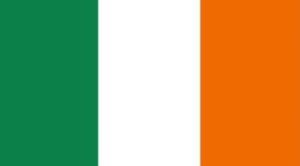
The Irish Tricolour
Originally intended as a symbol of peace between traditions, it has come to represent Irish identity and Nationalist aspiration across the island.
For many, it expresses heritage, sacrifice, and sovereignty — but for many Unionists, it remains unacceptable as a shared national emblem.
Its significance is real, but its exclusivity prevents it from functioning as an island-wide neutral emblem.
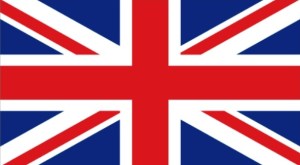
The Union Flag
A powerful symbol of British identity, Unionist heritage, and constitutional loyalty in Northern Ireland.
To others, it represents a historic imbalance and political dominance.
The new design does not erase this symbol. It acknowledges its constitutional and cultural importance, while recognising that it too cannot serve as a shared all-island emblem.
The Path Forward
In that spirit, we must reflect not only on these national flags but on the broader emblems that shaped Irish identity over centuries.
Each holds real meaning, yet none alone can speak for everyone in a society shaped by multiple traditions, narratives, and loyalties.
A future grounded in parity requires a new symbol that honours history without repeating its hierarchies or exclusions.
Symbols That Precede Division
Long before modern national flags became markers of conflict, Ireland’s cultural landscape was shaped by emblems that belonged to the island as a whole.
These symbols were not partisan, not territorial, and not exclusive.
They remind us that identity can be expressed without rivalry, and that meaning can emerge from what communities once valued together.
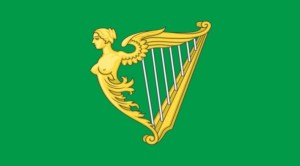
The Green Harp Flag
A foundational emblem of Irish identity, used across traditions and centuries — by Protestant reformers, Catholic organisations, and Dissenting groups long before the Tricolour existed.
It represents heritage, continuity, and cultural memory. In the new design, it returns as a subtle, non-dominant presence — no longer political, but a symbol of shared environment, cultural inheritance, and belonging.
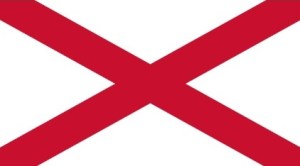
St. Patrick’s Saltire
Originating from the Fitzgerald family and used historically within Ireland itself, the Saltire remains a shared symbol that predates modern division.
It continues to appear in Downpatrick, and is used by Irish public bodies because it is seen as neutral and historically grounded, not as a contemporary political claim. In this context, it becomes a bridge between traditions, acknowledging British-Irish historical overlap without asserting dominance.
Why These Symbols Matter Today
Around the world, post-conflict societies adopt new emblems not to erase their past, but to integrate it.
The Green Harp and St. Patrick’s Saltire show that Irish identity has always been layered, shared, and capable of reinterpretation.
When placed into a new design, they carry both memory and aspiration — linking the past to a future where symbolic balance supports constitutional balance.
Lessons from the South African Flag
South Africa’s experience shows how a nation can move forward when it chooses a symbol that includes every community equally.
While Ireland’s context is different, the underlying principle is the same: healing requires a shared emblem, not one tradition’s flag elevated above another.
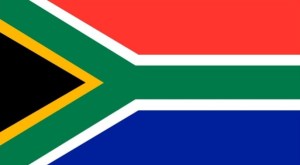
The South African Flag
Introduced at the end of apartheid, it became a powerful emblem of shared citizenship and renewed national identity.
Its design was not about victory or erasure — but about bringing historic flags together without dominance, allowing every group to see themselves in the future of the state.
Why It Matters for Ireland
The success of the South African flag shows that national renewal begins with symbols that honour all identities equally, not with the triumph of one narrative over another.
Ireland’s proposed flag follows this same principle:
-
inclusion over victory,
-
balance over dominance,
shared constitutional belonging over inherited division.
Ireland’s circumstances are unique — but societies everywhere require symbols that support respect, parity, and peaceful coexistence.
Where Ireland Finds Its Own Symbol
Ireland’s answer does not come from borrowing another nation’s imagery.
It draws instead from a long-standing cultural symbol familiar across communities —
a symbol recognised across traditions.
It is used not to prescribe identity or political outcome, but to provide a common point of reference.
That symbol is the Claddagh — referenced not as a political emblem or constitutional instrument, but as a culturally established motif whose meaning is widely understood and whose associations precede modern division.
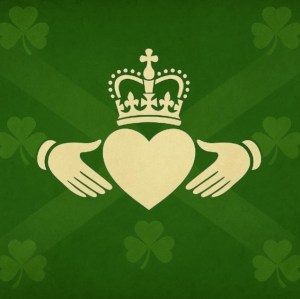
The Claddagh Ring: A Symbol Reimagined
More than a decorative motif, the Claddagh ring is a long-standing cultural symbol. With a history of use across communities, it functions as a familiar social emblem rather than a political or constitutional statement. In this context, it is used to express shared human values that support mutual respect and stable coexistence.
The Ring carries three enduring elements:
-
The Heart — Love
-
The Crown — Loyalty
-
The Clasped Hands — Friendship
These elements are referenced descriptively, not redefined. They provide a neutral vocabulary for discussing relational principles without assigning ideological meaning or altering established cultural associations. Its long history of circulation across communities reinforces this non-political character.
A Motif Recognised Across Communities
The Claddagh ring has travelled far beyond its origins in Galway. Over time, it has been worn across Ireland and Britain, including by members of the British royal family — not as a political emblem, but as a personal and cultural ornament. That history is not widely known, but it is factual.
Its significance lies in what it reveals: Irish cultural symbols did not always align neatly with political identity. The Claddagh moved across social, religious, and constitutional boundaries without being claimed by any one tradition. It is referenced here as a familiar object whose history reflects overlap rather than separation — a reminder that shared human symbols can persist even where political narratives diverge.
A Shared Cultural Inheritance
Seen this way, the Claddagh reflects a wider pattern in Ireland’s cultural history: shared symbols that carried meaning across communities long before modern political divisions took hold. Its endurance points to a deeper continuity in how identity was understood — relational rather than exclusive.
That same continuity is visible in the legacy of St. Patrick, whose historical presence predates later constitutional divides and whose significance is recognised across traditions. Together, these references mark a cultural inheritance that was shared before it was contested, and which can be acknowledged again without prescribing political alignment or constitutional outcome.
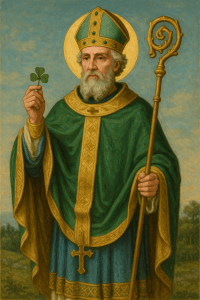
St. Patrick — A Shared Legacy Across Traditions
St. Patrick — born in Roman Britain and embraced across Protestant and Catholic traditions — stands as a symbol of faith, endurance, and cultural continuity. His life bridges identities: a British figure who became central to Irish heritage, embodying the kind of cross-community resonance that this new emblem seeks to honour.
The shamrock, used by Patrick to teach spiritual unity, remains one of Ireland’s most recognisable symbols. In this flag, it carries renewed meaning — not as a religious statement, but as an emblem of shared inheritance, connecting traditions, identities, faith, and culture across the island.
As we reflect on enduring emblems like the shamrock, Saltire, and Green Harp, the path becomes clear:
the new flag must grow from shared heritage, not contested identity.
The next chapter invites us to imagine that symbol —
not as a replacement,
but as a canvas where history, belonging, and shared hopes finally converge.
Revealing the Flag — A Blank Space for a Parity
Ireland’s future deserves a symbol that does not impose the past, but builds from it.
With a foundation rooted in shared heritage, inclusive symbols, and enduring values, the time comes to prepare for a new national emblem — one that reflects not just identity, but intent.
For now, the final flag remains intentionally undisclosed, represented only as a blank canvas.
This is not an absence, but a constitutional pause — signalling that any enduring symbol must emerge through consent, participation, and parity, rather than inheritance or imposition.
What emerges will not erase memory; it will reflect it.
It will not enforce allegiance; it will invite belonging.
It stands as a structural promise that a future shaped through shared constitutional consent must be authored by all, and imposed by none.
What This New Flag Must Achieve:
-
Acceptance is essential — Symbols only hold when they are shared. The Tricolour is rejected by many Unionists; the Union Flag carries painful associations for many Nationalists. A lasting peace requires a symbol that belongs to all, excludes none, and threatens no one.
-
Governance over division — This flag aligns with a shared constitutional framework, where all identities are structurally represented, not merely acknowledged.
-
A bridge, not a replacement — The Tricolour and Union Flag are not erased. They remain what they always were — expressions of cherished traditions. This new emblem simply provides a neutral shared space, one that supports constitutional parity rather than a political victory.
 The Parity Accord